Maine Coon Cattery
THE GREATGATSBY GUIDE
A gentle introduction
Bringing home a new kitten is exciting and joyful, but it can also be stressful for the little one. Kittens are creatures of habit and can feel overwhelmed by unfamiliar sights, smells, and sounds. A calm, patient, gradual introduction helps your kitten settle in and build a strong bond of trust with you.
At your own pace, one step at a time
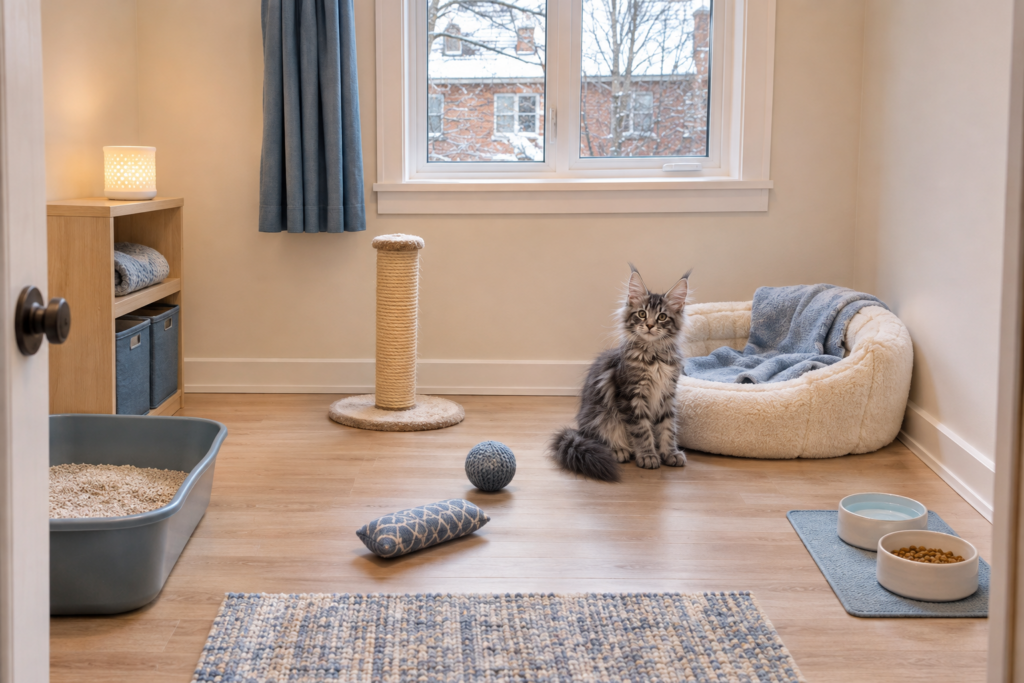
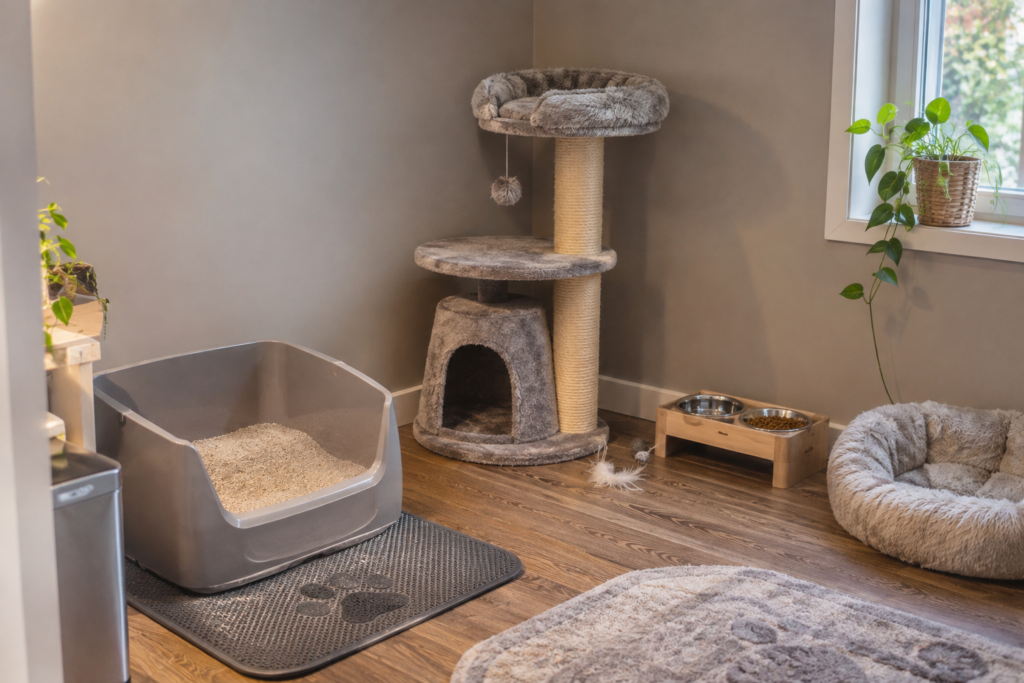
Before your kitten arrives, set up a small, quiet, safe room where they can get used to their surroundings. A bathroom, laundry room, or spare bedroom can work well. The room should have:
Starting in a smaller space helps your kitten feel secure, keeps them from hiding somewhere hard to reach, and lets you monitor their eating, drinking, and litter box habits.
The first day is mostly about observing your kitten and gently reassuring them. Your kitten may:
This is normal. Let your kitten come to you at their own pace. Sit quietly in the room, speak softly, and offer gentle pets if they approach. Avoid loud noises, sudden movements, and large groups of people, which can be overstimulating.
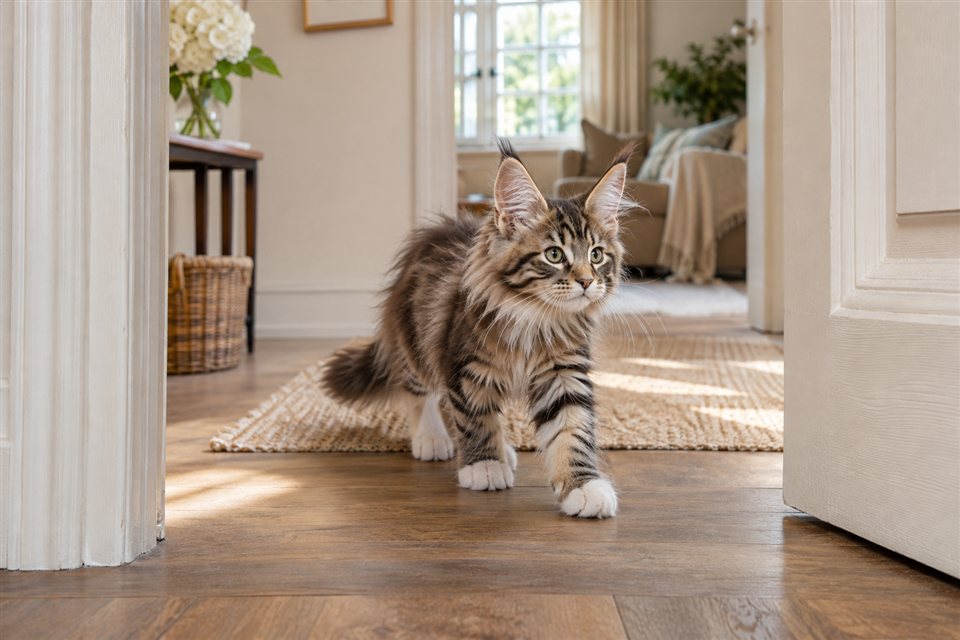
After the first day or two, your kitten can gradually explore the rest of the home, one room at a time. Close doors behind you to keep them out of unsafe areas. At this stage:
Gradual exploration helps your kitten build confidence while reducing stress and the risk of accidents.
Kittens thrive on routine. Keep mealtimes, litter box cleaning, and playtime as consistent as possible. Predictable routines help your kitten feel secure and adjust to their new home more quickly.
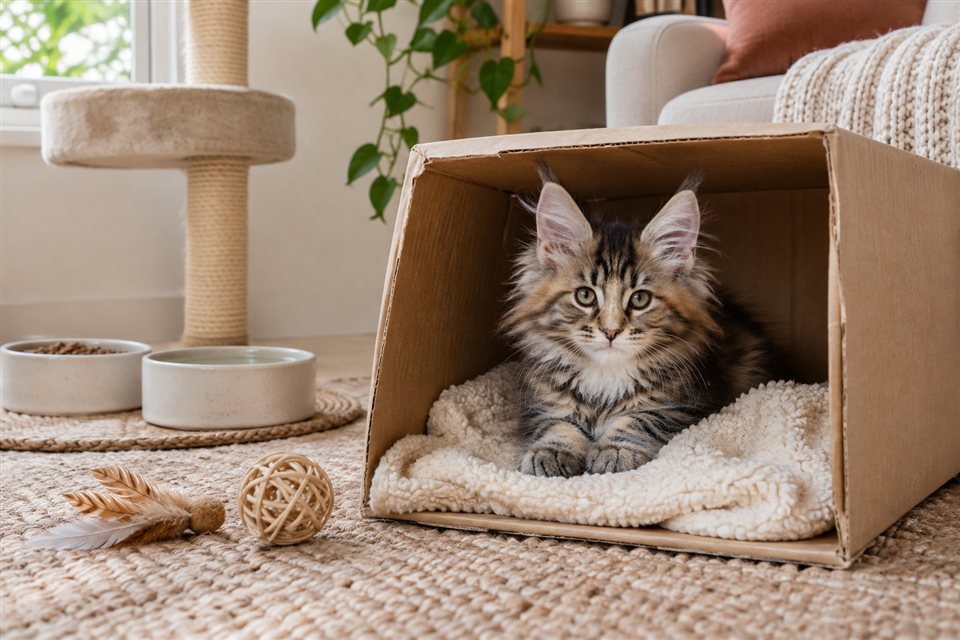
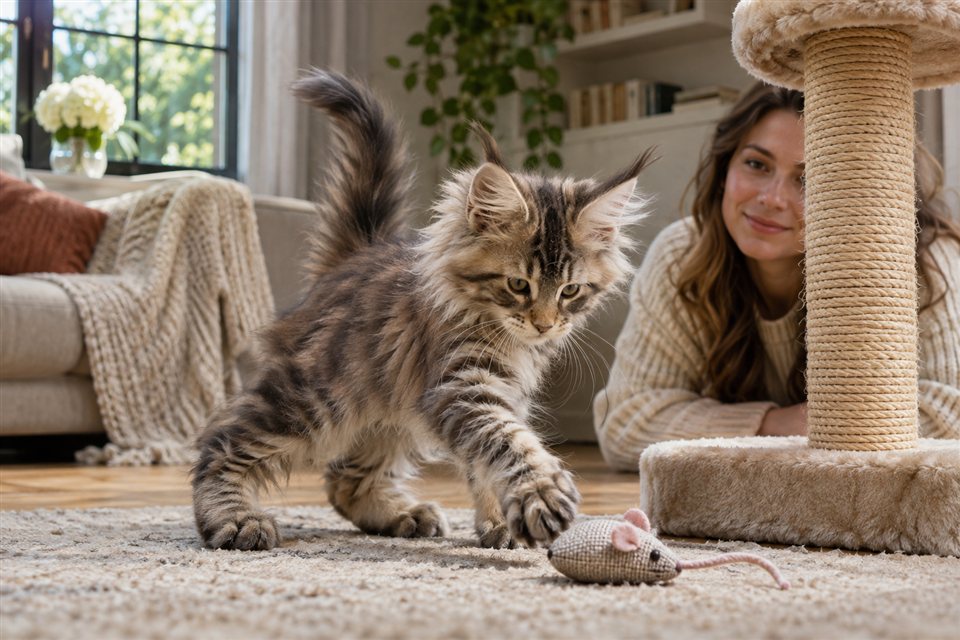
Play is fun and essential to healthy development. Gentle interactive play helps your kitten burn energy, build trust in you, and develop coordination. Offer scratching posts, toys, and safe objects to explore. Kittens may nibble or pounce during play. Gently redirect them to toys instead of hands.
Some stress is normal. Watch for signs that your kitten may need extra reassurance:
Patience matters. Most kittens adjust within a week or two with calm, safe surroundings and consistent care.
These steps help make your kitten’s first experience in their new home calm, positive, and reassuring. A thoughtful introduction can help prevent behaviour problems, strengthen your relationship, and help your kitten grow into a happy, confident cat.
02 · MEETING OTHER PETS
Patience, supervision, and positive associations are at the heart of a good first meeting.
When you welcome a new kitten, plan a 7- to 10-day quarantine before introducing them to your other pets. This short period helps protect the health and safety of both the kitten and the animals already in your home.
Keep your kitten in a separate, safe room with their own food, water, litter box, and toys.
Monitor their health closely. Watch for sneezing, watery eyes, diarrhea, vomiting, or low energy. Even healthy kittens benefit from this observation period.
After 7 to 10 days, if your kitten is healthy and behaving normally, you can start gradual, supervised introductions. Always give them a way to retreat, move at their pace, and never force contact.
This quarantine is a simple, effective way to protect your pets and help your kitten adjust safely to their new home.
Once the 7- to 10-day quarantine is over and your kitten is healthy, start introducing them gradually to your resident cats. Patience and preparation help all the cats adjust safely and comfortably.
Before the cats meet directly, swap blankets, beds, or toys between the kitten and your other cats. Cats rely heavily on scent to recognize others and feel at ease. This lets them get familiar with each other’s scent before meeting face to face.
Mealtimes are another good opportunity to encourage a calm relationship. Food is naturally a positive experience, and sharing it from a distance helps the cats associate each other with something pleasant.
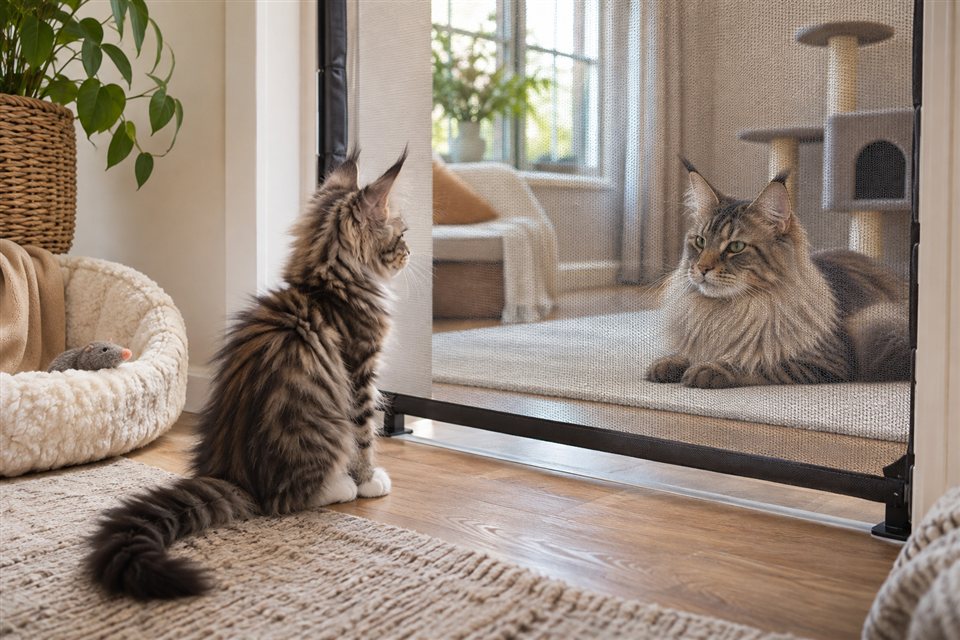
After several calm meals and some blanket or toy swaps, begin supervised visual meetings in a neutral space. Let your kitten explore and keep interactions brief and positive. Then try short face-to-face introductions. Always give your kitten a way to retreat, and never force contact.
Quarantine, scent swapping, and mealtime introductions give your kitten and resident cats the best chance to settle in comfortably and develop a lasting, peaceful relationship.
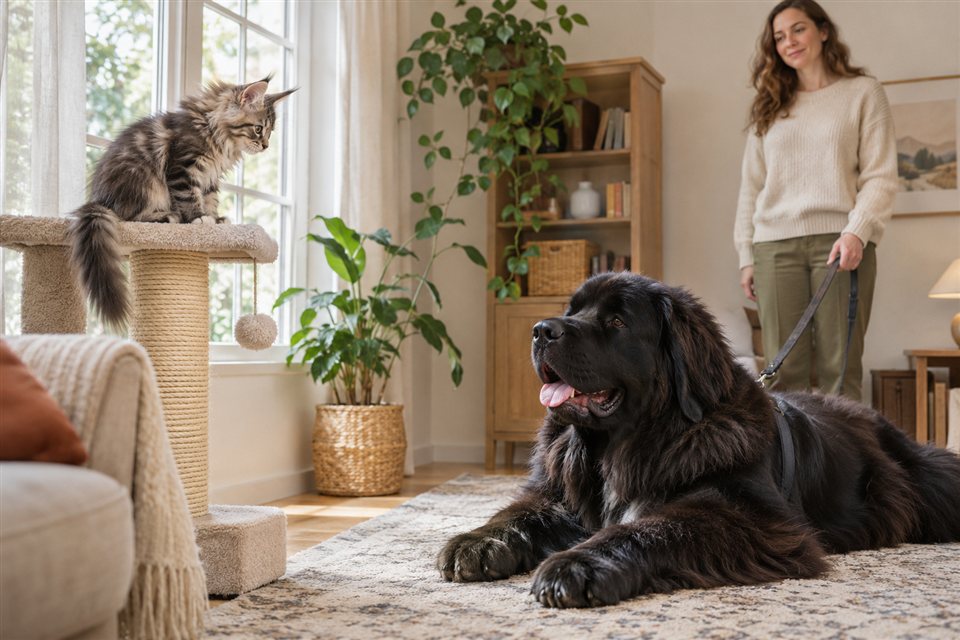
Introducing a kitten to a dog takes patience, supervision, and a gradual approach. Start by keeping your kitten in a separate, quiet room for the first 7 to 10 days. Quarantine lets your kitten adjust to their new home and gives you time to observe both animals.
When you’re ready to introduce them, make sure the dog is calm and responds to basic commands. Gently hold your kitten or let them explore a safe space while the dog stays on a leash. Let the dog watch and sniff from a distance, and keep the first interactions brief and positive. Reward calm behaviour in both animals with treats or praise.
As they get more comfortable, you can allow supervised off-leash interactions in a secure, enclosed space. Make sure your kitten has escape routes or high places to retreat to. Keep food, toys, and litter boxes separate at first, then gradually increase their time together. Never leave them alone together until you’re sure both animals are comfortable and safe.
With patience, supervision, and positive reinforcement, your kitten and dog can learn to live together peacefully and may eventually develop a trusting, playful bond.

03 · BUILDING GOOD HABITS
The right box, the right location, and a gradual transition are the foundations of a comfortable setup.
A good litter box setup matters for your kitten’s comfort, cleanliness, and long-term habits. Litter box problems are often blamed on behaviour, but the setup itself is frequently the cause. The right box from the start helps your kitten feel secure, confident, and relaxed when using it.
A common mistake is choosing a litter box that’s too small. Many boxes sold for kittens are already quite small and quickly become uncomfortable as the kitten grows.
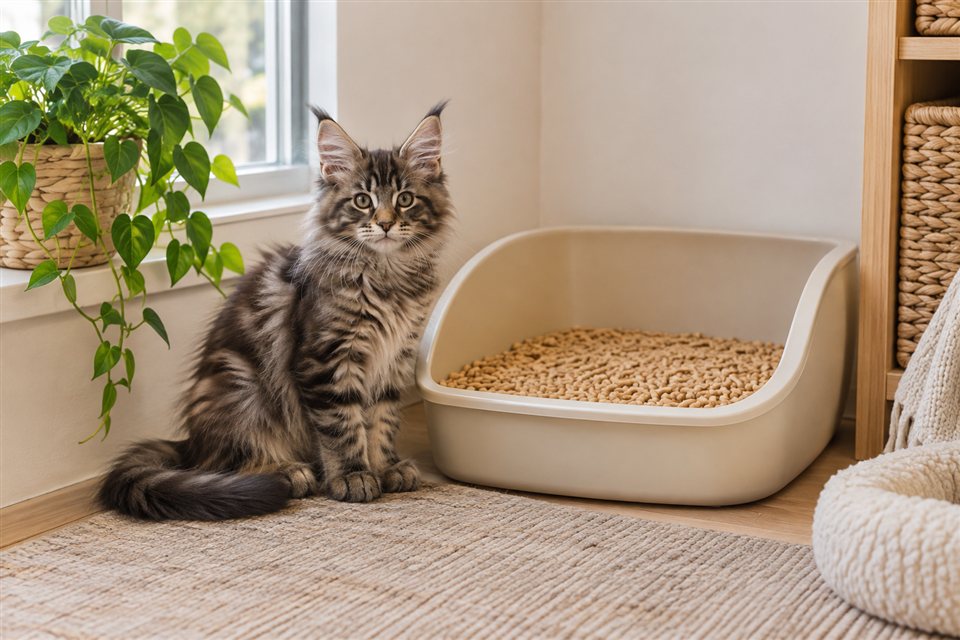
Your kitten should be able to step in easily, turn all the way around, dig, and cover without feeling cramped. A good rule of thumb is to use a box at least one and a half times the length of the kitten or adult cat, measured from nose to tail. We strongly recommend starting with a large box so you don’t have to replace it later.
A large box won’t confuse your kitten. It gives them the room they instinctively need to use the litter box properly.
We strongly recommend a large, open box without a lid or door.
Covered boxes may look more appealing to people, but many cats find them uncomfortable. A lid can trap odours, reduce airflow, and create a dark, enclosed space that some cats find stressful. Kittens may find a covered box intimidating, especially if they can’t see their surroundings and feel secure.
An uncovered box lets your kitten:
Cats are both predators and prey by nature, and feeling trapped while using the litter box can make them anxious. An open box respects that instinct and helps them use it regularly and confidently.
Place the litter box in a quiet, low-traffic spot where your kitten can use it without feeling rushed or watched. Avoid putting it:
The box should still be easy to reach. Your kitten should be able to find it quickly and get to it at any time.
If your home has several floors, ideally provide a box on each floor, especially while your cat is still a kitten.
Many new owners think one box is enough, especially for a single kitten. Providing the right number is one of the simplest ways to prevent accidents and help your kitten feel comfortable using the litter box.
The usual recommendation is one box per cat, plus one extra.
For example:
Even if your kitten is your only cat, two boxes are ideal. The extra option helps reduce stress, especially in the first few weeks while they’re still exploring and settling in.
Cats are territorial and sensitive to cleanliness. Having multiple litter boxes helps for several reasons:
The type of litter can make a real difference to your kitten’s comfort, confidence, and habits. Kittens are naturally curious and sensitive to textures. Starting with familiar litter and introducing changes gradually helps prevent stress and accidents.
Your kitten was raised primarily with wood pellet litter. It’s gentle on little paws and easy to keep clean. Pellet litter has several advantages:
About three weeks before your kitten goes home, we gradually introduce regular clumping litter alongside the pellets. This helps them get used to a litter commonly used in homes and makes the transition easier.
Carefully introducing wood pellets and regular litter helps your kitten develop good litter box habits for life.
We’re here to help you get ready to welcome your new companion.